Introduction
At a time when the profitability of citrus farming is being challenged by multiple factors — climatic, phytosanitary, economic, and regulatory — every agronomic decision matters.
One of the most critical, yet often underestimated, decisions is choosing a variety suited to the conditions of its environment. A poor varietal choice can turn a promising crop into a persistent problem.
A clear example is brown spot in citrus, a disease caused by Alternaria alternata that affects sensitive mandarin hybrids such as Clemenvilla (Nova), Fortune, Minneola, and Murcott.
In areas where environmental conditions favor the pathogen — high humidity, poor air circulation, and frequent rainfall in spring and autumn — controlling the disease can become extremely difficult or even unfeasible, especially with current restrictions on fungicide use.
In this post, we review the key factors that link variety, environment, and phytosanitary risk, using brown spot as an example of poor varietal adaptation.
What is brown spot and which varieties are affected?
Brown spot is caused by a toxin-producing strain of the fungus A. alternata.
This fungus releases a specific toxin (ACT) that affects susceptible varieties, mainly mandarin hybrids derived from ‘Dancy’.
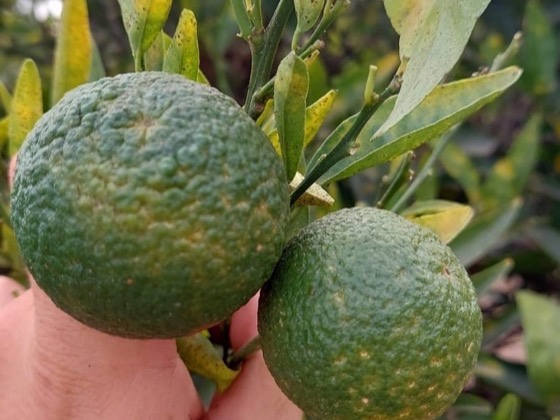
Symptoms appear on both young leaves and developing fruit, and typically include:
-
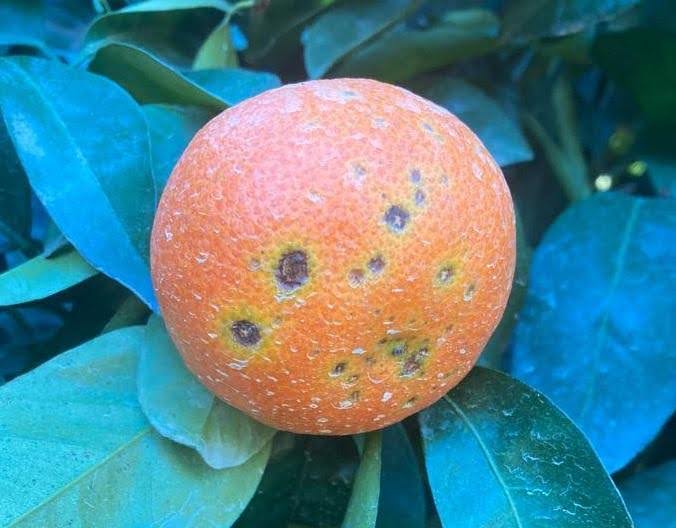
Necrotic lesions and corky scabs on the fruit peel.
-
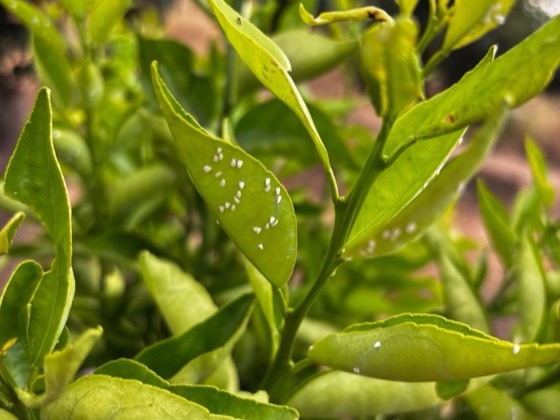
Necrosis on young shoots, causing premature leaf drop.
-
Early fruit drop in infected trees.
The most serious problem caused by this disease is the commercial depreciation of affected fruit. Although the damage is mostly aesthetic, it can lead to unacceptable economic losses that threaten the viability of the orchard.
Most affected varieties include:
-
Highly sensitive: Clemenvilla (Nova), Fortune, Minneola.
-
Moderately sensitive: Murcott.
-
Low or no sensitivity: Varieties not derived from Dancy, or those adapted to dry conditions.
The Environment — The overlooked factor in variety selection.
The development of the disease depends directly on environmental conditions.
The presence of inoculum (spores) in areas with previous outbreaks remains constant throughout the year. What truly triggers infection are the climatic and agronomic factors that favor fungal activity:
-
High humidity and surface moisture: essential for spore germination.
-
Poor ventilation: prolongs the duration of leaf wetness.
-
Mild temperatures (15–27 °C / 59–80 °F): optimal for infection in spring and autumn.
-
Continuous flush of young shoots: exposes new susceptible tissue to infection.
Varieties such as Clemenvilla (Nova) or Fortune, planted in areas with high relative humidity, frequent rainfall, or limited air movement, are highly likely to experience severe brown spot outbreaks, leading to damaged fruit, defoliation, and an increased need for treatments.
Chemistry no longer solves everything
For many years, the control of A. alternata in citrus relied mainly on chemical treatments, with mancozeb being the most commonly used and effective fungicide.
Today, mancozeb-based products are no longer authorized in Spain.
Although other products such as copper or pyraclostrobin remain available, many farms that once had the disease under control now face recurrent and difficult-to-manage infections.
Additional challenges include:
-
Cost: intensive chemical control reduces profit margins, especially in plots where the environment favors the disease and repeated treatments are necessary.
-
Resistance: the effectiveness of the remaining authorized fungicides is limited, and resistance can quickly develop.
-
Logistics: in many farms, treatments cannot be applied immediately after rainfall or humidity peaks due to reliance on external service providers. Delays in spraying significantly reduce treatment efficacy.
Under these conditions, many sensitive orchards in humid or poorly ventilated areas have become nearly unmanageable, forcing growers to rethink their planting and management strategies.
Conclusion: Planning = Profitability
Choosing which variety to plant cannot be based solely on market demand or fruit size.
In regions where brown spot is endemic or where conditions favor infection, the profitability of certain sensitive varieties can be seriously compromised.
Before planting, it is essential to assess:
-
Local climate: rainfall patterns and relative humidity.
-
Natural ventilation: exposure to wind and orchard layout.
-
Sanitary history of the area: presence of A. alternata in nearby plots.
-
Feasibility of sustainable control strategies.
A variety that is profitable in one area may become a poor decision just a few kilometers away if conditions change.
Next steps
If you’re planning to plant or replant your orchard, make sure to conduct a technical assessment of your environment.
Varietal selection is a key agronomic decision — a good choice reduces risks and costs in the long run. A poor one can become unsustainable.

 Js
Js
.png) Talk to Us
Get a free trial this season for your team & members*
Talk to Us
Get a free trial this season for your team & members*

.png)
.png)