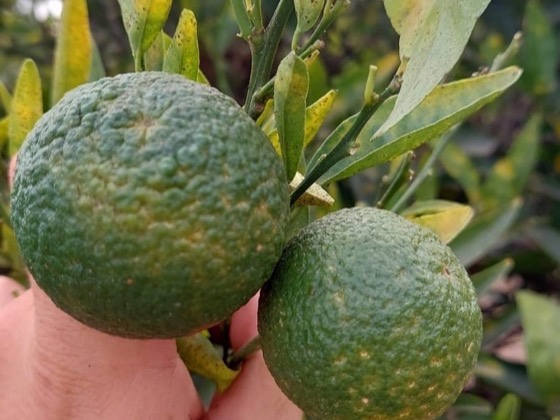
In the Valencian Community, the agricultural model based on small, fragmented plots (known in Spanish as minifundios) has long been traditional. Today, however, with stagnant farm-gate prices and rising production costs, many small farmers are being forced to abandon their citrus groves.
Tight profit margins, difficulties in mechanization, limited access to larger markets, and low negotiating power have made it increasingly hard to compete. How can a farmer with just 2–5 hanegadas (831m2 of agricultural land surface) survive against large-scale operators?
This situation raises key questions that deserve serious discussion:
-
Does it still make sense to sustain a minifundio-based model?
-
Should we promote land consolidation or shared farming systems as a path toward professionalization, efficiency, and differentiation?
-
How can we achieve a profitable and sustainable model that ensures generational continuity in the countryside?
Profitability and Prices in Valencian Citrus Farming: Does the Small Farmer Have a Future?
In recent years, profit margins in traditional Valencian citrus farming have reached a critical point. Many farmers operate at a loss or barely break even. The prevailing model; small, family-run farms using conventional methods, faces serious structural challenges.
The facts speak for themselves:
-
Parcels under one hectare make up the vast majority of citrus farms in Valencia.
-
Production costs (labor, plant protection products, water, insurance) continue to rise each year.
-
Farm-gate prices often fail to cover production costs.
-
Market standards regarding size, residues, and appearance are becoming increasingly strict.
-
Few young people are taking over citrus farms, leading to increasing land abandonment.
Minifundismo: Sustainable Model or Structural Burden?
The minifundio model made sense in its historical and social context, but under today’s conditions it prevents:
-
Efficient mechanization.
-
Rational water and input management at scale.
-
Coordinated marketing and logistics planning.
-
Access to larger markets demanding volume, consistency, and continuity.
This greatly limits the capacity of small producers to compete, even within cooperative structures.
Real Alternatives: Shared Cultivation and Land Consolidation
Here we list two potential paths that offer viable solutions:
1. Land Consolidation
Although complex from a legal and social perspective, land consolidation would allow the creation of more efficient farms—making room for technology adoption, cost reduction, and professional management.
2. Shared or Collective Cultivation
Some successful initiatives are already demonstrating that grouping small plots under joint management can work. This model enables:
-
Optimization of treatments and resource use.
-
Introduction of precision farming techniques and cost savings.
-
Greater bargaining power with buyers and packers.
-
More professional farm management without changing land ownership.
What This Means for the Technical Community - Beyond Agronomy
For advisors, field technicians, farm managers, and cooperative leaders, the discussion needs to extend beyond agronomy. Profitability is influenced not only by crop health but also by the structure and coordination of the production model.
Sustaining Valencian citrus farming will depend on improving efficiency, cooperation, and long-term planning across the sector.

.png)
 C
C
.png) Talk to Us
Get a free trial this season for your team & members*
Talk to Us
Get a free trial this season for your team & members*

.png)