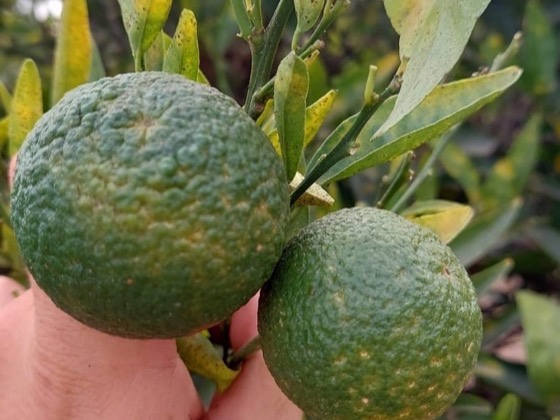
Last year, on a citrus farm visit in Spain, I stopped to photograph a piece of moldy fruit. Gray, textured, half rotten, oddly beautiful in the morning light. If we had trained a computer vision model on thousands of images like it, the model would learn exactly one thing: reject. Not diseased but interesting, not worth a second look, just a label correctly applied, then discarded from the dataset along with everything else it might have taught someone paying closer attention.
That gap, between classifying something and understanding it, is the actual state of AI in agriculture right now, and it's worth being precise about, because the hype cycle keeps collapsing the two.
Why agricultural computer vision is a genuinely harder problem than most people assume
It's easy to assume image recognition is a solved problem by now. Phones identify faces, cars identify pedestrians, so surely a model can identify a diseased piece of fruit. The research says otherwise, and the reasons are specific rather than vague.
Agricultural environments are, in the language of the computer vision literature, highly unstructured, marked by severe occlusion, variable lighting conditions, and seasonal appearance changes, all of which demand architectures capable of generalizing across different crop stages and conditions. A recent review of computer vision in crop management found that dynamic environmental interference, changes in lighting, temperature, humidity, and background, directly affects how accurately a model reads what it's looking at, and that issues like target overlap and occlusion persist even in well-built systems.
One documented case makes the point concrete. A model built to detect small red pears was trained on nearly 1,600 images, a solid dataset by most standards, and still had a clear weakness: it contained few occluded samples, was captured mostly in daytime lighting, and was validated in a single orchard without testing across different regions or crops. A model can perform beautifully in the conditions it was trained on and fail quietly the moment the light changes, a leaf shifts, or the same disease shows up on a different variety two fields over. Domain generalization, whether a model trained in one place keeps working in another, remains one of the central unsolved problems in this field.
What this looks like from the farmer's side, not the model's
Two things we heard directly, in Spain and in Japan, describe the same gap from the other direction.
On the citrus side, a farmer named Alberto, who has worked roughly eight hectares near Sevilla for decades, described a shrinking list of approved pest control products and tighter timing windows than he used to have. Older products, he told us, used to cover his mistakes. Now precision matters in a way it didn't before. That is exactly the kind of judgment call a model trained to classify a leaf or a fruit as healthy or diseased cannot make for him. Classification tells him what is happening. It does not tell him, given this specific week, this specific block of trees, and a narrowing set of tools, what he should actually do.
In Japan, we saw the same gap handled a different way. Rice farmers we spoke with in the Akita region use drone-based pest alerts, and cooperatives distribute regional pest notices. But the farmers don't treat an alert as an instruction. One farmer described his actual process plainly: he checks his own field for the pest, and if he doesn't find it there, he doesn't act, regardless of what the regional signal says. The alert narrows his attention. It doesn't replace the decision. That's the augmentation pattern working exactly as it should, a system pointing a human toward what to look at, and a human still deciding what it means for that particular field.
Why the technology stops where it stops
None of this makes computer vision useless in agriculture, it's genuinely good at narrow, well-defined tasks: confirming whether a specific pest is present in an image, flagging early stress in a crop from a signal invisible to the human eye, counting fruit at scale. Those are real, valuable jobs that take a technician hours and a model seconds.
What it isn't good at, at least not yet, is judgment under ambiguity, the thing a person does automatically when something doesn't fit the label they expected. A model sees a piece of fruit and correctly says reject. A person who has spent enough seasons in citrus might look at the same fruit and wonder whether that particular mold pattern says something about that week's humidity, or that tree's history, or a treatment applied too late. That wondering isn't something you can specify in a training objective. It's closer to curiosity, and curiosity doesn't show up in a confusion matrix.
Anthropic's own analysis of how AI is actually being used across the economy found that real-world use leans toward augmentation, AI collaborating with and enhancing human capability, rather than full automation, in the large majority of cases. Agriculture is a domain where that pattern is closer to a hard requirement than a design choice. The physical variability of a field isn't a temporary inconvenience computer vision will overcome next year. It's the defining feature of the environment these systems have to operate in.
Where this leaves the technology, honestly
This is the reasoning behind a decision we made early at Greenda, worth stating plainly rather than as a slogan: computer vision earns its place in the workflow by answering a narrow, well-posed question fast and reliably, confirming pest identity, reducing the guesswork a technician faces before making a call. It doesn't replace the technician's or the farmer's judgment about what to do with that information, because the research is honest that it can't yet, not reliably, not across every field, season, and lighting condition a real farm will produce.
Alberto deciding what his shrinking toolkit allows this week, and a rice farmer in Akita walking his own field before acting on an alert, are both doing the same job a model cannot do for them. Classifying is not the hard part anymore. Understanding what a classification means, in a specific field, for a specific person, in a specific season, still is.

.png)

 CN
CN
.png)
.png)