.png)

Yellow lemon tree leaves? Find out the causes, detect CYVCV early, and know when to test. Read the complete guide.
Why Are the Leaves on My Lemon Tree Turning Yellow? Causes, Diseases, and a Warning About a New Virus in Spain
The leaf usually tells you what's wrong. Learn to read the pattern, rule out the obvious, and recognize the point where it stops being a deficiency.
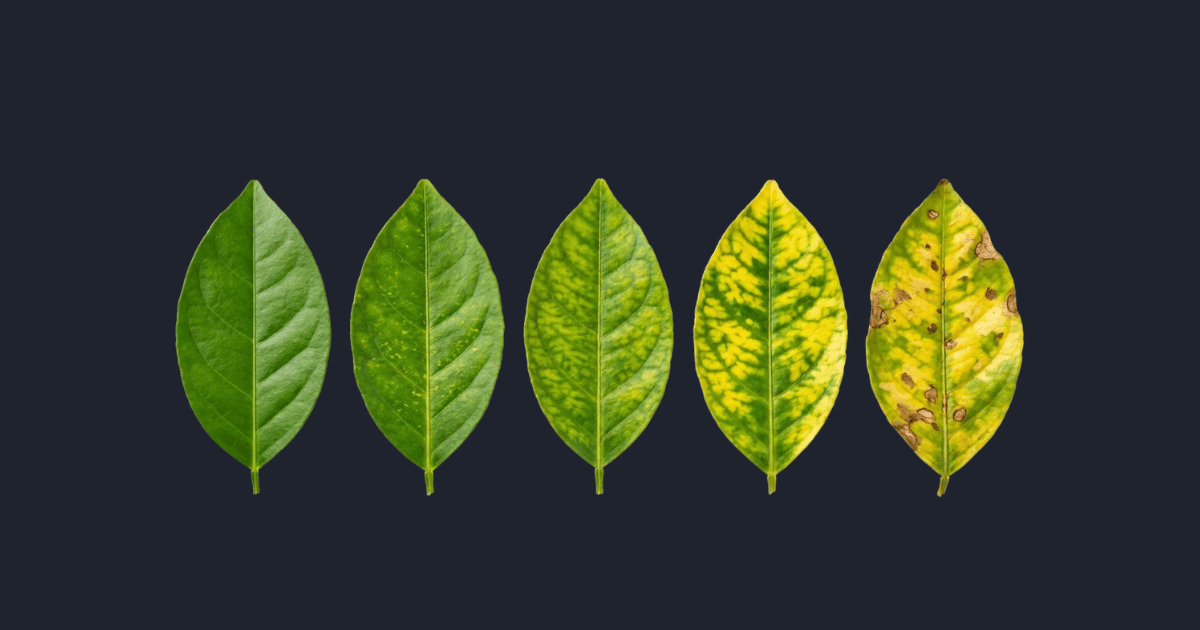
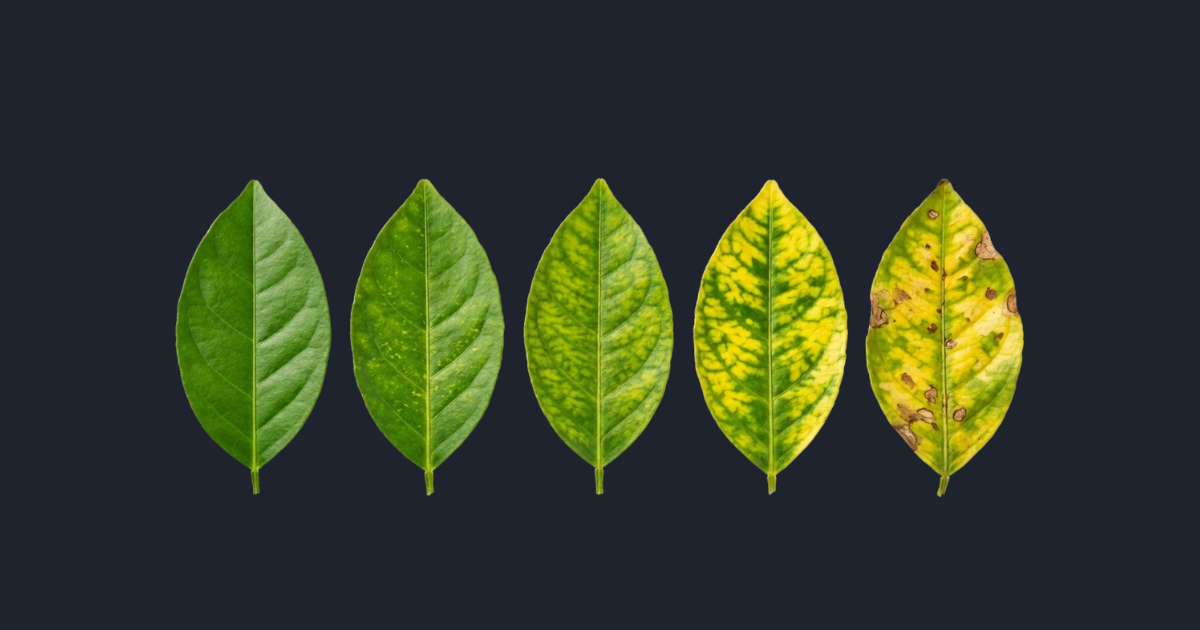
Progression of yellowing along the veins : AI Modified Image - Only for reference, not an actual image.
Few things worry a citrus grower more than lemon tree leaves turning yellow. The reassuring part is that the leaf usually tells you what is wrong: the pattern of yellowing, which leaves are affected, and what other signs appear together let you narrow the cause before you treat anything.
Most yellowing is nutritional or water-related iron chlorosis leads the list on the calcareous soils common around the Mediterranean. But it pays to recognise the pests and the handful of diseases that cause similar symptoms, including two incurable viruses every lemon grower should now have on their radar: the long-established HLB (citrus greening) and the newly arrived CYVCV.
This guide helps you read the leaf, rule out the obvious, and recognise the point where the problem stops being a deficiency and becomes something that needs laboratory confirmation.
How to read yellow leaves: the pattern matters
Before reaching for a disease name, check three things, the pattern points to the cause.
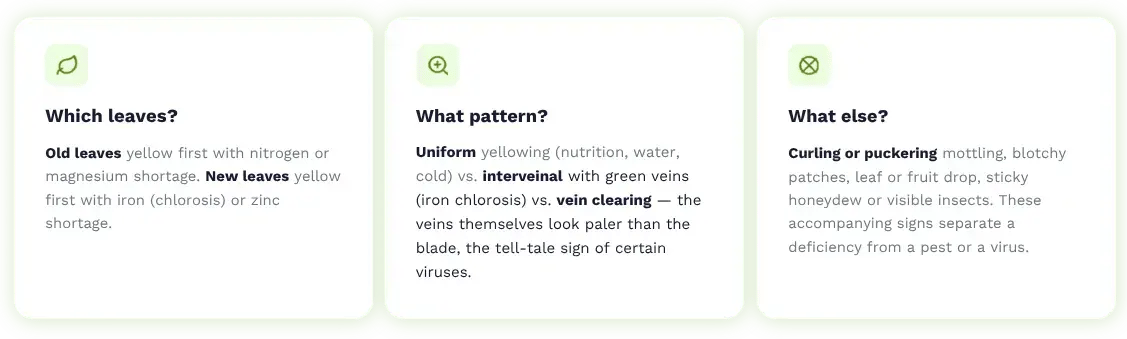
The most common causes, most to least likely
Work down this list before you reach for a disease name. The first three account for the overwhelming majority of yellow lemon leaves.
1. Nutritional deficiencies & iron chlorosis
On calcareous soils, iron chlorosis is often cause number one: yellowing between the veins of young leaves, with the veins staying green. Nitrogen shortage yellows older leaves uniformly; magnesium, the margins of older leaves; zinc, interveinal mottling on new growth. All are correctable with the right feeding and soil management.
Most likely on Mediterranean soils
2. Irrigation & Root Asphyxia
Both over- and under-watering yellow the leaf. Waterlogging and root asphyxia are extremely common and also open the door to soil fungi. Check drainage and irrigation frequency before suspecting pests or disease.
3. Cold & stress
Cold snaps and transplant stress cause transient yellowing that usually resolves on its own.
4. Pests
Of the common citrus pests, spider mites cause the most noticeable leaf yellowing look for fine stippling and a bronzed or bleached appearance across the leaf surface.
Other sap-feeding insects such as aphids (Aphis spiraecola, A. gossypii), citrus whitefly (Dialeurodes citri), mealybug and scale weaken the tree and leave honeydew and sooty mould, but do not produce the same clear yellowing symptom.
Read our other expert blog on the keys to keeping mealybug off your citrus.
5. Diseases
Once nutrition, water and pests are ruled out, diseases come into play: brown spot (Alternaria alternata, more a mandarin problem, see our A. alternata brown spot article), Phytophthora gummosis / root rot, and the viruses — HLB and the emerging CYVCV, covered next.
The Two Incurable Viruses: HLB vs. CYVCV
For authoritative HLB background, the USDA's Citrus Greening / HLB resource and university extension material are the references. The rest of this article focuses on CYVCV, the part of the picture that is genuinely new.
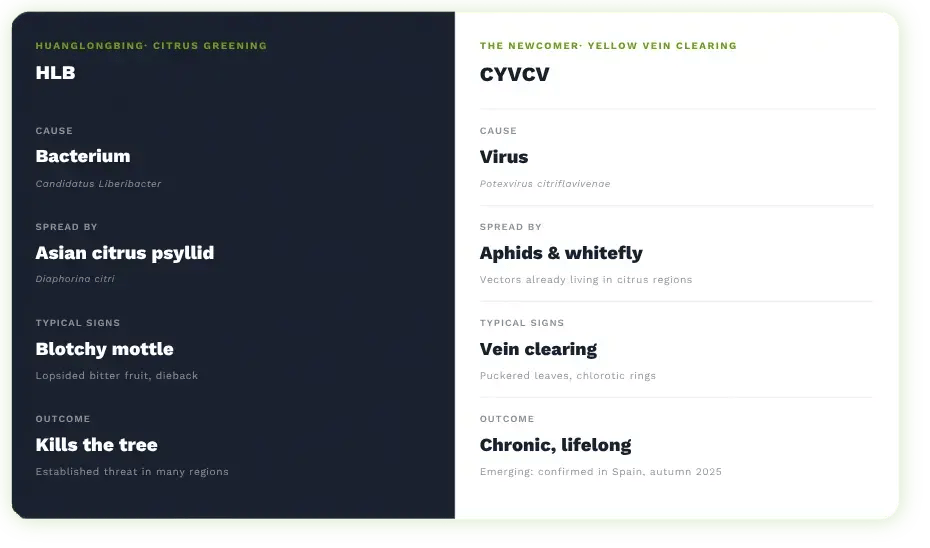
The Newcomer
CYVCV: The Virus Every Lemon Grower Should Watch For
CYVCV, the agent of yellow vein clearing disease (YVCD), was first observed on lemon and sour orange in Pakistan in 1988 and has spread across Asia. It has been on the EPPO Alert List since October 2022.
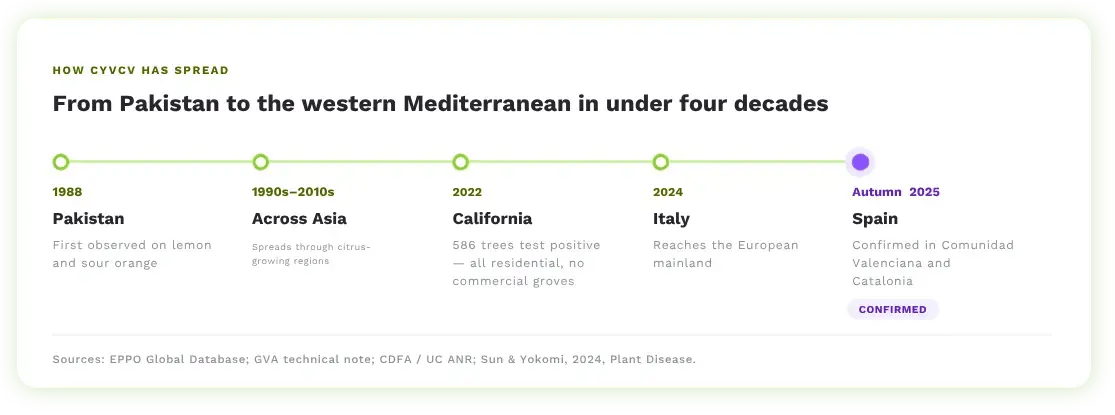
Why it matter for lemon trees
- There is no cure. An infected tree remains infected for life and becomes a permanent source of inoculum for nearby trees.
- It damages lemon, lime and sour orange, where you will see symptoms: vein clearing (especially secondary veins), puckered and distorted leaves, chlorotic rings, vein darkening on the underside, and in advanced cases premature drop and reduced fruit size.
- It spreads easily, without requiring any special environmental conditions.
.webp?width=1737&height=1121&name=image%20(1).webp)
Source: Photo by Gerardo Uribe/UCR
How CYVCV Spreads
All routes are already active in citrus regions: five vector species confirmed in Spain (Aphis spiraecola, A. aurantii, A. craccivora, A. gossypii and the citrus whitefly Dialeurodes citri); infected nursery material; un-disinfected pruning tools; and grafting from an infected tree — including a symptomless orange or mandarin.
The part most people get wrong: oranges and mandarins infect silently
Graft-transmission studies show that many sweet orange and mandarin varieties can be infected without developing symptoms, and without the losses lemon suffers. They aren't visibly damaged — but they act as silent reservoirs, feeding the virus back to lemon blocks via vectors and grafting.
What to Do If You Suspect CYVCV
See vein clearing, puckered leaves, fruit malformation or premature drop in lemon or sour orange? Don't delay, and don't self-diagnose.
- Report it to your local agricultural extension office (in Valencia, the GVA Servei de Sanitat Vegetal / Oficina Comarcal Agraria).
- Confirm the diagnosis with RT-qPCR. Symptoms aren't confirmation and lab testing is the only option for symptomless oranges and mandarins.
- Do not move any material (plants, buds, unsterilized tools) until you have the results.
Why This Matters for the Citrus Sector
Spain is the EU's largest citrus producer and the world's biggest fresh-citrus exporter, with most of its lemon crop bound for export markets that demand top quality.
.webp?width=898&height=259&name=figure4-ENG%20(1).webp)
For more on the economics already squeezing growers, see our piece on local production vs. third-country competition.
In Conclusion
Read the leaf, rule out the obvious, confirm what matters
- Check the pattern. Interveinal on young leaves > think iron. Uniform on old leaves > nitrogen / water.
- Rule out watering and pests before disease.
- Vein clearing + puckered leaves on lemon > suspect CYVCV: report and test.
- Prevent always: certified material, disinfected tools, and control of aphids and whitefly.
External References
- EPPO Global Database CYVCV datasheet: gd.eppo.int/taxon/CSYV00
- USDA APHIS Citrus Greening / HLB: aphis.usda.gov
- UC IPM Citrus pest & disease guidelines: ipm.ucanr.edu
- UC ANR Topics in Subtropics CYVCV in California: ucanr.edu
- Sun & Yokomi (2024), Plant Disease California CYVCV genetics: apsjournals.apsnet.org
.png)
.jpeg) RJ
RJ
Rahul Jaglan
Rahul is GTM Lead at Greenda, where he builds the go-to-market function from the ground up from marketing campaigns in Spain to the stories that help farmers understand what AI-powered pest management can actually do for them.
All articles by this author